The fashion industry isn’t what it used to be.
Ten years ago, you could throw up a Shopify store, run some Facebook ads, and watch the orders roll in. Those days? Gone. The digital landscape’s evolved, and if you’re still using 2018 tactics in 2025, you’re already behind.
But here’s the thing: digital marketing for fashion brands has never been more powerful. It’s just different now. More nuanced. More… human? And if you nail it, you can scale faster than ever before.
Let us walk through what actually works right now with a heavy focus on what drives real, measurable results.
How Can Digital Marketing Help Fashion Brands Grow?
Digital marketing for fashion brands is your entire growth engine. It’s how you turn strangers into customers, customers into superfans, and superfans into unpaid brand ambassadors who won’t shut up about your pieces.
Think about it this way: Fashion’s always been about storytelling. The fabric, the cut, the way a jacket makes someone feel like they can conquer a boardroom – that’s narrative. Digital marketing for fashion brands just gives you more stages to tell that story. And unlike traditional retail, where you’re limited to foot traffic and word-of-mouth, digital lets you reach someone scrolling in bed at 11 PM who suddenly needs that dress they didn’t know existed five minutes ago.
Here’s what digital marketing for fashion brands actually does:
Measurable ROI on every dollar spent: Every campaign, every ad, every email – you see the return. Cost per acquisition, return on ad spend, customer lifetime value. You know exactly what’s working and what’s hemorrhaging budget.
Precision targeting that traditional media could never touch: You can serve ads to 28-year-old women in Chicago who follow Reformation, shop at & Other Stories, and read Vogue. Try doing that with a billboard. More importantly, you can test which audience segment converts best and dump money into winners.
Data that tells you what’s actually working: Not gut feelings. Real numbers. You’ll know which collection drives sales, which ad creative converts at 4% versus 1.2%, and which email subject line makes people click. Fashion’s always been part art, part science – digital marketing cranks up the science dial without killing the art.
Scalable acquisition channels. When you find something that works – an ad angle, an audience, a funnel – you can scale it. Fast. That’s the difference between hoping for organic growth and engineering it.
And yeah, it drives revenue. But the brands that scale aren’t just chasing sales, they’re building systems. Digital marketing lets you do that.
What Are the Best Online Marketing Strategies for Fashion Brands?
Here’s how to do digital marketing for fashion brands:
1. Paid Advertising: The Revenue Engine
Meta Ads (Facebook & Instagram)
Here’s how to actually win with Meta in 2025:
Creative testing is non-negotiable: You need to be testing at least 3-5 new ad creatives every week. Static images, carousels, reels-style video, UGC content – what works this month might not work next month. The creative fatigue is real, especially in fashion, where people see the same ad repeatedly.
We’re talking about different hooks in the first 3 seconds. One ad starts with a close-up of the fabric texture. Another opens with someone putting on the jacket. A third shows the transformation – before and after. Test everything. Your CTR (click-through rate) and CPM (cost per thousand impressions) will tell you what resonates.
Campaign structure matters more than people think: Don’t just throw everything into one campaign. Structure it properly:
- Prospecting campaigns (cold audiences, lookalikes, interest targeting)
- Retargeting campaigns (people who visited, added to cart, viewed products)
- Retention campaigns (existing customers for repeat purchases)
Each needs different creative, different messaging, different goals.
ROAS isn’t your only metric: A healthy ROAS (return on ad spend) for fashion brands in 2025 is about 3:1 to 5:1 depending on your margin structure. Anything below 2:1, you’re probably losing money once you account for fulfillment and overhead. Above 6:1? Either you’re crushing it or your tracking’s broken – double-check your attribution.
Budget allocation is everything: Start with $50-100/day for testing. Once you find winning ad sets (consistently above your target ROAS for 7+ days), scale by 20-30% every 3-4 days. Scale too fast, and the algorithm freaks out. Scale too slow and you’re leaving money on the table.
And don’t forget about Advantage+ campaigns. Meta’s AI-driven campaign structure can outperform manual targeting when you have solid creative and a proven pixel. But you need data first – at least 50 conversions a week for the algorithm to optimize properly.
Google Ads (Search & Shopping)
This is high-intent traffic. Someone searching “black leather ankle boots women” is ready to buy. They’re comparing options. If you’re not showing up, they’re buying from your competitor.
Google Shopping campaigns are your bread and butter: Product feed optimization is critical here. Your titles need to be descriptive and keyword-rich. “Women’s Black Leather Ankle Boots – Italian Leather – Size 6-10” performs better than “The Madison Boot.”
High-quality images. Competitive pricing (or at least appear competitive). Reviews and ratings, if you have them. All of this feeds into your Quality Score, which affects your CPC (cost per click) and ad position.
Target ROAS bidding works well once you have conversion data. Start with manual CPC to gather data, then switch to automated bidding strategies. We typically see Google Shopping ROAS in the 4:1 to 7:1 range for established fashion brands with good product-market fit.
Search campaigns for branded and non-branded terms: Yes, bid on your brand name – your competitors are, and you don’t want them stealing traffic. For non-branded terms, focus on high-intent keywords. “Buy [product type],” “best [product type],” “[product type] online.”
Use SKAGs (Single Keyword Ad Groups) or tight theme ad groups for better control over messaging and bidding. Your ad copy should match the search intent exactly. If someone searches “sustainable women’s workwear,” your ad had better mention sustainability and workwear.
2. Email & SMS: The Profit Centers
Email and SMS are your highest-ROI channels once you have a list.
Email should drive 25-40% of your revenue. If it’s not, you’re leaving money on the table.
Here’s the framework:
Welcome series (automated): New subscriber joins your list. They get 3-5 emails over the next week. Email 1: Welcome + discount (if that’s your strategy). Email 2: Tell your brand story. Email 3: Best sellers + social proof. Email 4: Overcome objections (shipping, returns, sizing). Email 5: Last chance for discount. This series alone can convert 10-15% of new subscribers.
Abandoned cart series (automated): Someone adds to cart, doesn’t buy. Email 1 goes out after 1 hour (gentle reminder). Email 2 after 24 hours (add urgency or social proof). Email 3 after 48 hours (offer incentive if needed). Recovery rate should be 15-20% minimum.
Browse abandonment (automated): They looked but didn’t add to cart. Lighter touch, remind them what they viewed, show related items.
Post-purchase series (automated): Thank you, here’s what to expect, ask for review, suggest complementary products. This is where you increase customer lifetime value.
Campaign emails (manual): New collection launches, sales, restocks, content. Send 3-5 per week depending on your audience. Yes, that’s a lot. But segment your list – VIPs get different frequency than occasional buyers.
The metrics you actually care about:
- Open rate (15-25% is decent for fashion)
- Click rate (2-5% is solid)
- Conversion rate (varies wildly, but 1-3% is reasonable)
- Revenue per email sent (this is the big one—should be $0.50-$2.00+ for good campaigns)
SMS also delivers higher open rates (90%+), higher click rates, but you can’t overdo it. 2-4 texts per month unless it’s a sale. Use it for time-sensitive stuff: flash sales, back-in-stock alerts, exclusive drops for VIPs.
3. Conversion Rate Optimization: The Multiplier
You can drive all the traffic you want, but if your site doesn’t convert, you’re burning money.
Your conversion rate is everything: Industry average for fashion e-commerce is around 1-2%. If you’re below 1%, you have serious problems. Above 3%? You’re doing something right.
Site speed matters: Every second of load time kills conversions. Compress images, use a CDN, optimize your code. Google’s PageSpeed Insights will tell you what’s broken. A slow site on mobile is basically throwing money away, and 70% of your traffic is mobile.
Product pages need to sell: Multiple high-quality images (minimum 5-7). Zoom functionality. Videos, if possible – someone modeling the piece, showing the fit. Size guides that actually help. Reviews. Clear CTAs. Trust signals (returns, shipping, security badges).
Simplify checkout: Every extra step loses customers. Guest checkout option. Autofill. Multiple payment methods (credit card, PayPal, Apple Pay, Afterpay/Klarna for fashion). Progress indicators so people know how many steps are left.
Test everything: A/B test your product page layouts, your CTA button colors, your headline copy, your checkout flow. Small changes compound. A 0.5% improvement in conversion rate at scale is thousands in extra revenue.
4. Retargeting: Getting the 97% Who Didn’t Buy
97-99% of first-time visitors don’t buy. They just… leave. Retargeting is how you get them back.
Pixel everyone. Meta Pixel, Google Ads tag, TikTok Pixel. Track every visitor, every action. This data feeds your retargeting campaigns and lookalike audiences.
Segment your retargeting. Don’t show the same ad to someone who viewed your homepage and someone who spent 10 minutes on your product pages. Different intent, different message.
- Homepage/category page viewers: General brand awareness, highlight collections, social proof
- Product page viewers: Show them exactly what they looked at, plus similar items
- Add-to-cart abandoners: That exact product, urgency, maybe an incentive
- Past purchasers: New arrivals, complementary products, VIP-only stuff
Creative for retargeting should remind, not annoy: Show the product they viewed. Add a review or testimonial. Create urgency (low stock, limited time). Make it easy to come back and complete the purchase.
Frequency caps are your friend: Don’t show the same person your ad 47 times in a week. That’s how you burn brand equity. Cap it at 3-5 impressions per week for most audiences.
5. Analytics & Attribution: Know Your Numbers
You can’t optimize what you don’t measure. And in 2025, attribution is messier than ever thanks to iOS privacy changes and cookie restrictions.
Track everything:
- Traffic sources and their quality
- Cost per click, cost per acquisition by channel
- ROAS by campaign, ad set, even individual ad
- Customer lifetime value by acquisition channel
- Repeat purchase rate
- Average order value
Use UTM parameters religiously. Every link in every email, every social post, every ad. You need to know where traffic comes from.
Multi-touch attribution is the reality. Someone might see your Instagram ad, Google your brand later, click an email, then buy. Which channel gets credit? All of them played a role. Use tools like Triple Whale or Northbeam for better attribution modeling.
Weekly reporting, monthly deep dives. Check your numbers weekly to catch issues early. Monthly, analyze trends, identify what’s scaling, kill what’s dying.
Performance Recommendations:
Now, these strategies below are important, but they’re the long game. They support your performance marketing, build brand equity, and create organic growth. Just don’t expect immediate ROAS from them.
TikTok and Instagram Reels (Organic)
Short-form video can go viral and drive massive traffic. But it’s unpredictable. One video hits, ten don’t. Keep creating, stay authentic, build community. When lightning strikes, be ready to capture that traffic and convert it.
SEO and AEO (The Long Game)
SEO takes 6-12 months to see real results, but once it’s working, it’s free traffic. Forever.
Blog about topics your customers search for. Optimize product pages. Build backlinks. Focus on Answer Engine Optimization – structure content to answer specific questions clearly. AI overviews and featured snippets pull from direct, concise answers.
This builds over time. It’s not fast, but it’s compounding.
Influencer Partnerships
Micro-influencers (10K-100K followers) with engaged audiences can drive sales. Track it with unique discount codes or links. If the ROI’s there, keep going. If not, move on. Treat it like performance marketing – measure, optimize, scale or kill.
Pinterest (Visual Discovery)
Pinterest users are planners and shoppers. Create pins, use keywords, link to product pages. Pins have long lifespans. Low effort, decent passive traffic. Worth having in the mix.
Collaborations and PR
Brand partnerships, press features, getting on gift guides – these build credibility and reach new audiences. But they’re support mechanisms, not growth engines.
How Do Fashion Brands Increase Online Visibility in 2025?
Multi-channel presence is mandatory. Be where your customers are. Paid ads, organic social, email, SEO, partnerships. Each channel feeds the others. Someone sees your TikTok, Googles your brand, signs up for emails, buys from a retargeting ad. It’s a web, not a straight line.
Paid advertising amplifies everything. You can have the best organic content in the world, but paid ads put you in front of thousands of qualified eyes immediately. It’s the fastest path to visibility and sales.
Retargeting keeps you top of mind. They saw you once, they’ll see you again. And again. Until they’re ready to buy.
Consistency wins. Brands that show up every day, test continuously, and stay in front of their audience—those are the ones that dominate. Not the ones that run ads for a month, see mediocre results, and quit.
The Reality Check Nobody Wants to Hear
Scaling a fashion brand with digital marketing takes testing, budget, and patience.
You’re not going to hit 5:1 ROAS on day one. You won’t find the perfect ad creative in week two. There’ll be campaigns that flop, tests that fail, and money that feels wasted.
That’s fine. That’s normal.
The brands that scale are the ones that stay consistent, keep testing, and don’t quit when the first three things don’t work. They understand that effective digital marketing for fashion brands is a marathon with occasional sprints.
That’s where BCM comes in.
We’re not a generalist agency that happens to work with fashion brands. We specialize in scaling DTC fashion and apparel companies through performance-driven digital marketing. We’ve spent years in the trenches figuring out what actually moves the needle for fashion brands specifically
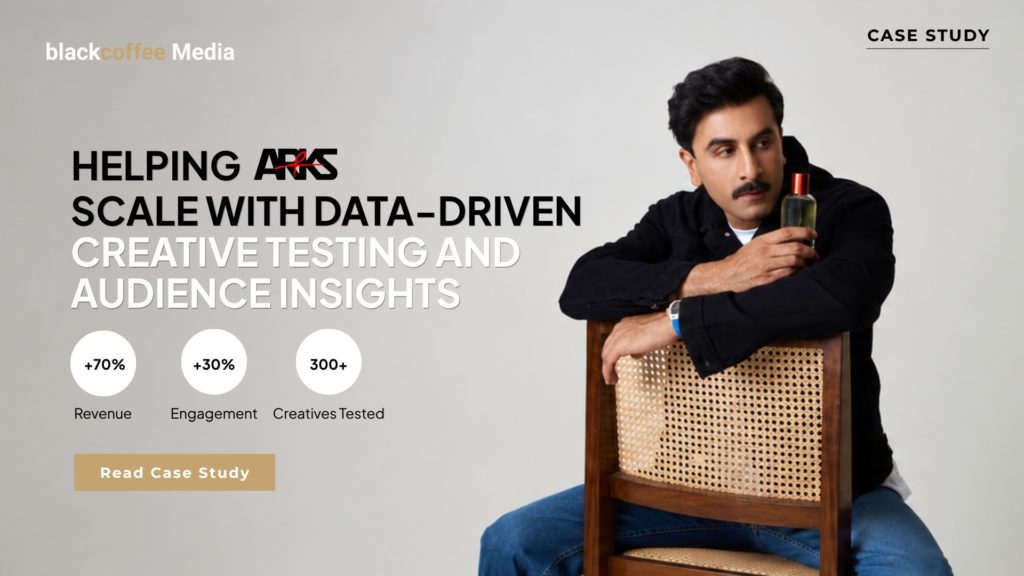
We’re currently partnered with brands like ARKS, Ranbir Kapoor’s fashion brand, and Xaya and we’ve worked with numerous fashion brands over the years, helping them build scalable marketing systems that drive real revenue growth. We know the creative fatigue cycles. We understand seasonal buying patterns and how to structure campaigns around launches. We know which metrics matter and which ones are vanity. And we know how to scale profitably without burning through your budget on tests that go nowhere.
The fashion brands that win in 2025 aren’t the ones with the biggest budgets. They’re the ones with the smartest systems, the best execution, and a partner who actually knows how to scale fashion brands specifically